Céad Mìle Fàilte! / A Hundred Thousand Welcomes!
Aberdeen
Aberdeen: Scotland’s Granite City – A Complete Guide to History, Economy, Culture, Tourism and Modern Life
Introduction to Aberdeen
Aberdeen is one of Scotland’s most important cities and a key economic, cultural and educational centre in the north-east of the country. Often referred to as the “Granite City” because of the distinctive grey stone used in many of its historic buildings, Aberdeen combines a rich maritime heritage, a thriving energy sector, world-class universities, beautiful coastal landscapes and a vibrant cultural scene.
Aberdeen is located on Scotland’s north-east coast between the mouths of the Rivers Dee and Don. Aberdeen is Scotland’s third-largest city by population and serves as the principal urban centre for the wider region of Aberdeenshire. The city has long been associated with trade, fishing, shipbuilding and, more recently, the offshore oil and gas industry that transformed its economy during the latter half of the twentieth century. Today, Aberdeen is recognised as one of the leading energy capitals of Europe while also investing heavily in renewable energy, technology, tourism and higher education.
Quick Facts About Aberdeen
| Fact | Information |
|---|---|
| Country | Scotland |
| Council Area | Aberdeen City |
| Region | North-East Scotland |
| Nickname | The Granite City |
| Population | Approximately 200,000+ |
| Founded | Medieval burgh |
| Main Rivers | River Dee, River Don |
| Major Industries | Energy, Technology, Education, Maritime Services |
| Universities | University of Aberdeen, Robert Gordon University |
| Airport | Aberdeen International Airport |
| Famous For | North Sea oil industry, granite architecture, maritime heritage |
Aberdeen at a Glance
Aberdeen is one of Scotland’s most important cities, serving as a major economic, cultural, educational, and maritime centre in the northeast of the country. Often referred to as the “Granite City”, Aberdeen is famous for its distinctive silver-grey architecture, thriving energy sector, rich maritime heritage, beautiful coastline, and high quality of life. Located between the mouths of the Rivers Dee and Don on the North Sea coast, Aberdeen is Scotland’s third-largest city and the administrative centre of the historic county of Aberdeenshire. The city combines centuries of history with modern industry, making it one of the most dynamic urban areas in the United Kingdom. Primary keywords: Aberdeen, Aberdeen Scotland, Granite City, Aberdeen tourism, Aberdeen attractions, Aberdeen economy, Aberdeen hotels, Aberdeen beaches, Aberdeen history, Aberdeen travel guide.Where Is Aberdeen?
Aberdeen lies approximately 120 miles (190 km) northeast of Edinburgh and around 145 miles (233 km) northeast of Glasgow. Its strategic coastal position has made it an important port and trading hub for centuries. Today, Aberdeen serves as the gateway to northeast Scotland, including the famous regions of Royal Deeside, the Cairngorms, and Scotland’s Castle Country.History of Aberdeen
Early Origins
Evidence of settlement in the area dates back thousands of years. The region was inhabited by the Picts before becoming part of the medieval Kingdom of Scotland. Two separate settlements eventually developed:
- Old Aberdeen
- New Aberdeen
Medieval Aberdeen
During the Middle Ages, Aberdeen became one of Scotland’s most important trading ports. Merchants exported wool, fish, hides, and timber to continental Europe. The city’s prosperity led to the construction of churches, markets, educational institutions, and defensive structures.
Aberdeen and the Granite Industry
From the 18th century onward, Aberdeen became internationally renowned for granite production. The city’s buildings were constructed using locally quarried stone, giving Aberdeen its distinctive appearance and earning it the nickname “The Granite City.” Aberdeen granite was used in projects across the world, including parts of:
- London
- New York
- Parliament buildings
- Major bridges and monuments
The Oil Boom
The discovery of North Sea oil during the 1960s and 1970s transformed Aberdeen dramatically. The city became Europe’s energy capital and headquarters for numerous international energy companies. This brought significant investment, population growth, and economic development. Today Aberdeen remains a global centre for:
Aberdeen Scotland, Aberdeen travel guide, Aberdeen attractions, Aberdeen tourism, Aberdeen hotels, Aberdeen beaches, Aberdeen history, Aberdeen economy, Granite City, Aberdeen museums, Aberdeen castles, Aberdeen culture, Aberdeen University, Aberdeen wildlife, things to do in Aberdeen, visit Aberdeen, Aberdeen city guide, Aberdeen landmarks, Aberdeen monuments, Aberdeen accommodation, Aberdeen Scotland tourism.
- Offshore engineering
- Renewable energy
- Energy transition technologies
- Maritime services
Aberdeen Population and Society
Aberdeen has a diverse and highly educated population. The city attracts:- Students
- Engineers
- Energy professionals
- Researchers
- Entrepreneurs
- International workers
- High employment levels
- Strong educational opportunities
- Good healthcare provision
- Access to beaches and countryside
- Relatively high average incomes
Economy of Aberdeen
Energy Industry
Aberdeen’s economy has long been dominated by the energy sector. Major areas include:- Oil and gas
- Offshore engineering
- Renewable energy
- Hydrogen technology
- Carbon capture and storage
- Offshore wind
Port and Maritime Economy
Port of Aberdeen is among the busiest ports in Scotland. Activities include:- Freight transport
- Fishing
- Cruise tourism
- Offshore support vessels
- Energy logistics
Education and Research
Universities and research institutions contribute significantly to the local economy through:- Scientific research
- Technology development
- Innovation programmes
- Skilled workforce training
Tourism
Tourism continues to grow as visitors discover Aberdeen’s:- Historic architecture
- Castles
- Coastal scenery
- Wildlife
- Festivals
- Whisky trails
Education in Aberdeen
University of Aberdeen
University of Aberdeen is one of the oldest universities in the English-speaking world. Founded in 1495, it has produced numerous distinguished graduates and researchers. The university is internationally respected for:- Medicine
- Energy studies
- Law
- History
- Life sciences
Robert Gordon University
Robert Gordon University is known for:- Business
- Engineering
- Computing
- Health sciences
- Professional education
Aberdeen Architecture and Urban Character
Few cities in Britain possess such a distinctive appearance. The extensive use of locally quarried granite creates streets that shimmer in sunlight, particularly after rain. Notable architectural styles include:- Medieval
- Victorian
- Gothic Revival
- Neo-classical
- Modern contemporary
Top Tourist Attractions in Aberdeen
Marischal College
Marischal College is one of the city’s most iconic landmarks. Its impressive granite façade is considered one of the largest granite buildings in the world. The building currently houses Aberdeen City Council offices.Aberdeen Maritime Museum
Aberdeen Maritime Museum tells the story of:- Shipbuilding
- Fishing
- Trade
- North Sea oil
Old Aberdeen
Old Aberdeen preserves much of the city’s medieval character. Visitors can explore:- Cobbled streets
- Historic university buildings
- Ancient churches
- Traditional architecture
St Machar’s Cathedral
St Machar’s Cathedral is one of Scotland’s most historic religious buildings. The cathedral dates largely from the 15th and 16th centuries and features a remarkable heraldic ceiling.Provost Skene’s House
Provost Skene’s House offers insights into local history and notable figures connected to the region.Tolbooth Museum
Tolbooth Museum occupies one of Scotland’s best-preserved former prisons.Aberdeen’s Beautiful Parks and Green Spaces
Despite its industrial reputation, Aberdeen is one of Scotland’s greenest cities.Duthie Park
Duthie Park is among the city’s most popular public parks. Highlights include:- Walking paths
- Gardens
- Play areas
- The famous Winter Gardens
David Welch Winter Gardens
David Welch Winter Gardens houses one of Europe’s largest indoor plant collections.Seaton Park
Seaton Park offers attractive riverside walks and views of St Machar’s Cathedral.Hazlehead Park
Hazlehead Park features woodland trails, gardens, and recreational facilities.Aberdeen Beaches and Coastline
Aberdeen Beach
Aberdeen Beach stretches for several kilometres along the North Sea. It is popular for:- Walking
- Surfing
- Running
- Wildlife observation
- Photography
Footdee (Fittie)
Footdee is a charming historic fishing village at the southern end of Aberdeen Beach. Its unique cottages and narrow lanes make it one of the city’s most photographed locations.Nature and Wildlife Near Aberdeen
Donmouth Local Nature Reserve
Donmouth Local Nature Reserve protects important coastal habitats and birdlife.Balmedie BeachBalmedie Beach lies just north of Aberdeen and features spectacular sand dunes.Forvie National Nature Reserve
Forvie National Nature Reserve is one of Scotland’s most important coastal reserves. Visitors may observe:- Seals
- Seabirds
- Migratory species
- Rare plants
Cairngorms National Park
Cairngorms National Park is easily accessible from Aberdeen and offers world-class outdoor recreation.Castles Near Aberdeen
Aberdeen sits at the heart of Scotland’s famous Castle Country.Crathes Castle
Crathes Castle is renowned for its turrets, painted ceilings, and gardens.Drum Castle
Drum Castle combines medieval and Victorian architecture.Castle Fraser
Castle Fraser is one of Scotland’s grandest tower houses.Dunnottar Castle
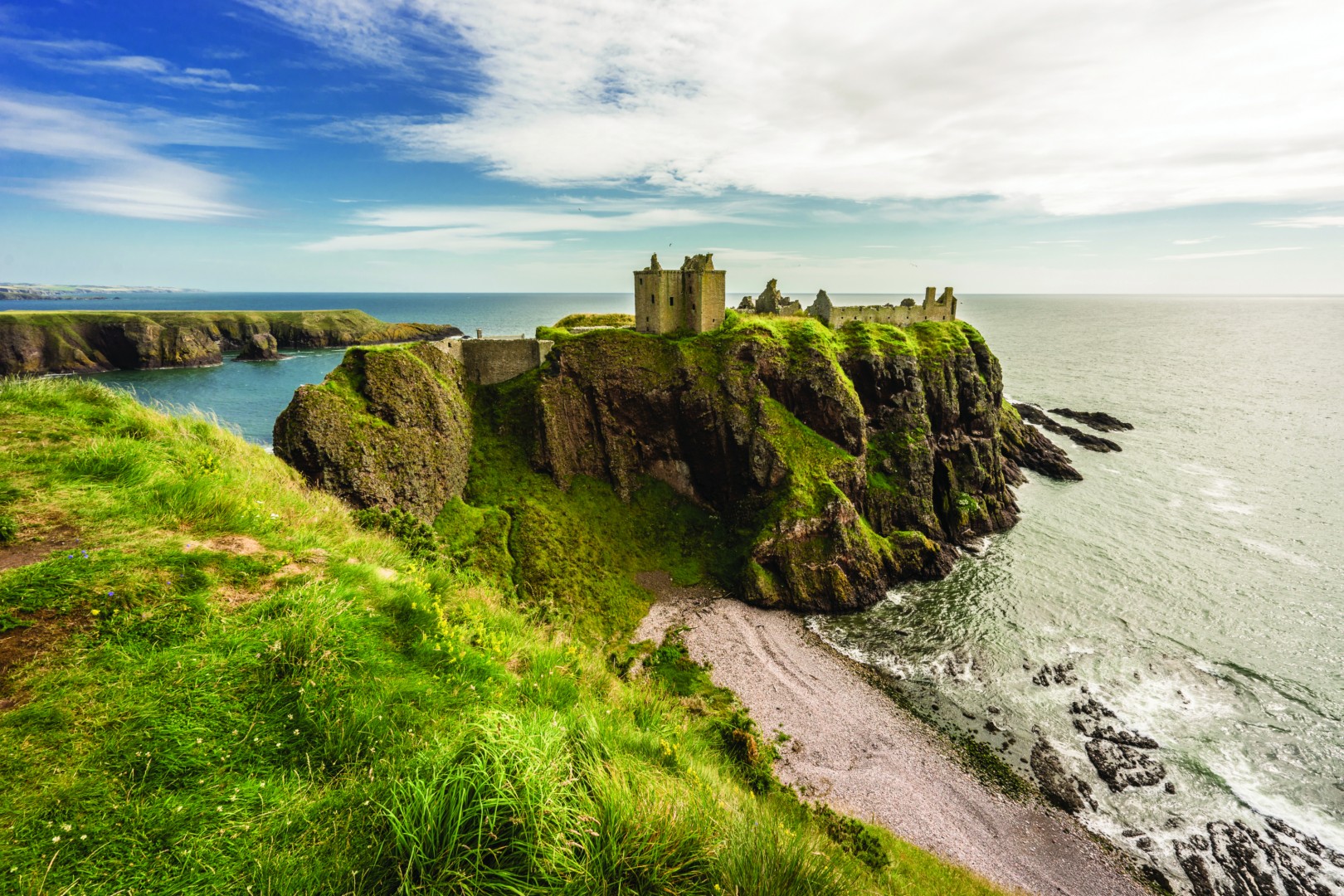
Dunnottar Castle is arguably the most dramatic castle in northeast Scotland. Perched on a rocky headland above the North Sea, it attracts visitors from around the world.Aberdeen – Culture and Arts
Aberdeen maintains a vibrant cultural scene.His Majesty’s Theatre
His Majesty’s Theatre hosts major touring productions and performances.Aberdeen Art GalleryAberdeen Art Gallery contains important collections of Scottish and international art.Festivals in Aberdeen
Major events include:- Spectra Light Festival
- Aberdeen International Youth Festival legacy events
- Tall Ships visits
- Music and cultural festivals
- Food and drink celebrations
Famous People from Aberdeen
Aberdeen and the surrounding region have produced many notable figures.Sir Alex Ferguson
Sir Alex Ferguson was born in Glasgow but built his managerial reputation at Aberdeen F.C..Annie Lennox
Annie Lennox was born in Aberdeen and became one of Scotland’s most internationally successful musicians.Lord Byron
Lord Byron spent part of his childhood in Aberdeen.Denis Law
Denis Law was born in the city and became one of Scotland’s greatest football players.Aberdeen – Crime and Public Safety
Aberdeen generally performs well compared with many similarly sized UK cities. Like all urban areas, it experiences:- Anti-social behaviour
- Property crime
- Vehicle crime
- Occasional violent incidents
- Strong community initiatives
- Effective policing
- Good public services
Shopping and Dining in Aberdeen
Popular retail areas include:- Union Street
- Bon Accord Centre
- Trinity Centre
- Fresh seafood
- Aberdeen Angus beef
- Traditional Scottish dishes
- International restaurants
Best Hotels in Aberdeen
Visitors can choose from luxury, boutique, and budget accommodation. Notable options include:- The Marcliffe Hotel and Spa
- Sandman Signature Aberdeen Hotel
- Leonardo Hotel Aberdeen
- Malmaison Aberdeen
- Ardoe House Hotel & Spa
Transportation
Aberdeen is well connected by:Air
Aberdeen Airport offers domestic and international connections.Rail
Regular rail services connect Aberdeen with:- Edinburgh
- Glasgow
- Inverness
- London
Road
Major routes include:- A90
- A96
Why Visit Aberdeen?
Aberdeen offers a unique combination of:- Historic architecture
- Coastal scenery
- World-class castles
- Beautiful parks
- Rich cultural heritage
- Excellent museums
- Wildlife experiences
- Strong hospitality sector
- Easy access to the Highlands
Aberdeen Scotland, Aberdeen travel guide, Aberdeen attractions, Aberdeen tourism, Aberdeen hotels, Aberdeen beaches, Aberdeen history, Aberdeen economy, Granite City, Aberdeen museums, Aberdeen castles, Aberdeen culture, Aberdeen University, Aberdeen wildlife, things to do in Aberdeen, visit Aberdeen, Aberdeen city guide, Aberdeen landmarks, Aberdeen monuments, Aberdeen accommodation, Aberdeen Scotland tourism.